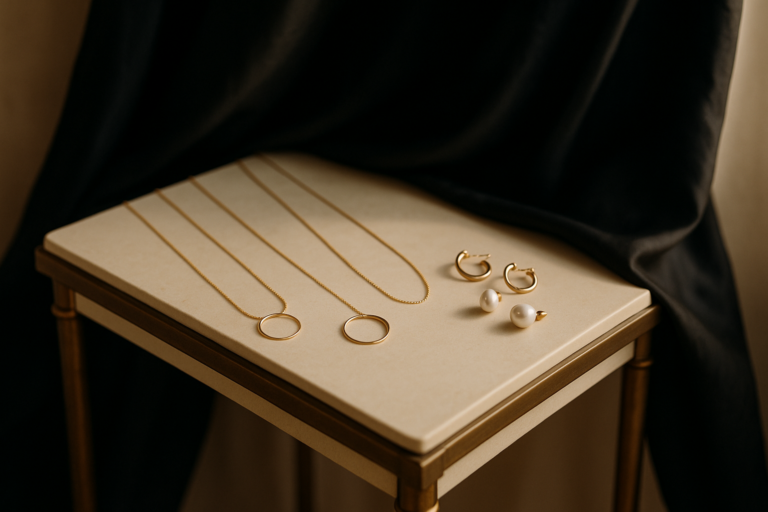
You’ve probably asked yourself—what’s the real difference between gold vermeil and solid gold? It’s a question I hear a lot from friends who are as passionate about jewelry as I am. Whether you’re standing in a jewelry store or browsing through Marysa, knowing the nuances can lead you to making choices that last.
Understanding Gold Vermeil
Gold vermeil is basically silver dipped in a thick layer of gold—at least 10k by definition. Not quite the imitation piece you might expect, it’s got some heft to it thanks to its sterling silver core. A good option if you’re not ready to dive into solid gold just yet but want something that feels substantial. According to GIA, it must be at least 2.5 microns thick, which means it’s more durable than plain plating.
Why Choose Gold Vermeil?
- Affordability: Usually less expensive than solid gold.
- Design Variety: Easier to find trendy designs without breaking the bank.
- Sterling Silver Core: Adds weight and feel of quality.
If you want more insights on balancing quality with cost-effective options, check out this guide on buying 14k gold jewelry.
The Case for Solid Gold
Solid gold screams luxury—but not all that glitters is equally golden! Understanding karats can help refine your choice. For daily wear, especially rings that take a beating, 14k is an excellent balance of durability and sheen. The higher purity in 18k makes it softer yet richer in color—a fact often highlighted by publications like Vogue. If you’re going for investment pieces or heirlooms, this could be your best bet.
A quick digression here—I remember my first splurge on an 18k bracelet; feeling its warmth against my skin was unexpectedly comforting. Not quite practical but oh so indulgent!
Solid Gold Pros:
- Permanence: Doesn’t tarnish or wear away over time.
- Investment Value: Higher resale value compared to plated options.
If long-term value is what you’re after, my thoughts on choosing high-karat pieces are further explored here.
A small note from me
I’ve learned through both success and mild disasters that understanding these materials can transform the way you view personal adornment. It’s funny how a small detail can change your entire day!